

Picture walking into a medical facility feeling anxious about your health, only to wait two hours while the staff seems too busy to acknowledge your concerns. Now imagine the opposite: being greeted warmly, seen promptly, and having every question answered with genuine care.
The difference isn’t just about comfort. In 2023, ambulatory surgery facilities achieved 85.3 out of 100 in patient satisfaction scores, while emergency departments scored just 66.6.
This gap reveals why understanding patient satisfaction in healthcare has become critical for organizational success.
The Hidden Truth About Patient Satisfaction
Patient satisfaction in healthcare has evolved far beyond simple bedside manner ratings. It’s now a sophisticated measurement system that directly influences Medicare reimbursements, malpractice insurance rates, and competitive positioning.
Most healthcare organizations focus purely on clinical outcomes, but the most successful ones understand that patient satisfaction bridges excellent medical care with sustainable business growth.
What many leaders miss is that satisfaction operates on three distinct levels: transactional, relational, and transformational. Transactional satisfaction covers whether appointments run smoothly. Relational satisfaction addresses whether patients feel heard and respected.
Transformational satisfaction determines whether patients trust the provider with their ongoing health. The facilities that excel don’t just meet expectations—they leverage patient insights to anticipate unspoken needs and create moments of genuine connection.
This shift becomes even more critical as healthcare consumerism rises. Patients now research providers like restaurants, reading reviews and comparing experiences before making care decisions.
Understanding Patient Satisfaction: Beyond Survey Scores
Moving beyond simple definitions, patient satisfaction reflects how well healthcare experiences align with patient expectations across their entire care journey. This journey includes everything from online research and appointment scheduling to post-treatment follow-up calls.
The Complete Patient Journey
Every touchpoint matters in shaping patient perceptions. Pre-visit communications set initial expectations, while parking experiences and facility wayfinding affect first impressions. Registration processes, wait times, and billing transparency all contribute to overall satisfaction scores.
Mapping Every Touchpoint
Smart organizations map each interaction point systematically. They examine phone call protocols, examine room environments, and review discharge procedures. This comprehensive approach reveals satisfaction drivers that traditional surveys often miss.
The challenge lies in recognizing that patient satisfaction isn’t just about the moment of care, but rather the entire ecosystem surrounding that care. Organizations that master this holistic view consistently outperform those focusing only on clinical interactions.
The Financial Impact of Patient Satisfaction
Healthcare reimbursement models have fundamentally shifted toward value-based purchasing, making satisfaction scores direct revenue drivers rather than nice-to-have metrics.
Value-Based Purchasing and Revenue Drivers
Medicare now ties up to 25% of hospital payments to patient satisfaction scores through value-based purchasing programs. Poor scores trigger significant financial penalties, while high scores generate bonus payments that can represent millions in additional revenue for large healthcare systems.
Real-World Implementation
Organizations tracking satisfaction correlation with reimbursement rates discover immediate financial impacts. Monthly satisfaction score reviews with finance teams reveal how patient perceptions directly affect organizational profitability and investment capacity.
The connection between satisfaction and financial health extends beyond reimbursement. Satisfied patients return for future care, generate referrals, and create positive online reviews that attract new patients. This creates a sustainable competitive advantage that compounds over time.
Patient Satisfaction’s Effect on Health Outcomes
Research consistently demonstrates that satisfied patients achieve better clinical results, creating a powerful synergy between experience and effectiveness.
Medication Adherence and Readmissions
Satisfied patients show 40% higher medication adherence rates and experience 30% fewer emergency room visits within 90 days of discharge. They trust their providers’ recommendations and feel more confident following treatment plans.
Tracking and Demonstrating ROI
Organizations implementing satisfaction tracking for chronic disease patients can correlate scores with readmission rates, demonstrating clear return on investment for experience improvement initiatives.
The science reveals that positive patient experiences reduce stress hormones, improve immune function, and enhance healing processes. When patients feel heard and valued, their bodies respond more favorably to treatment interventions.
Key Drivers of Patient Satisfaction
While every aspect of care influences patient perceptions, research identifies specific factors that consistently drive the highest satisfaction scores.
The Role of Technology
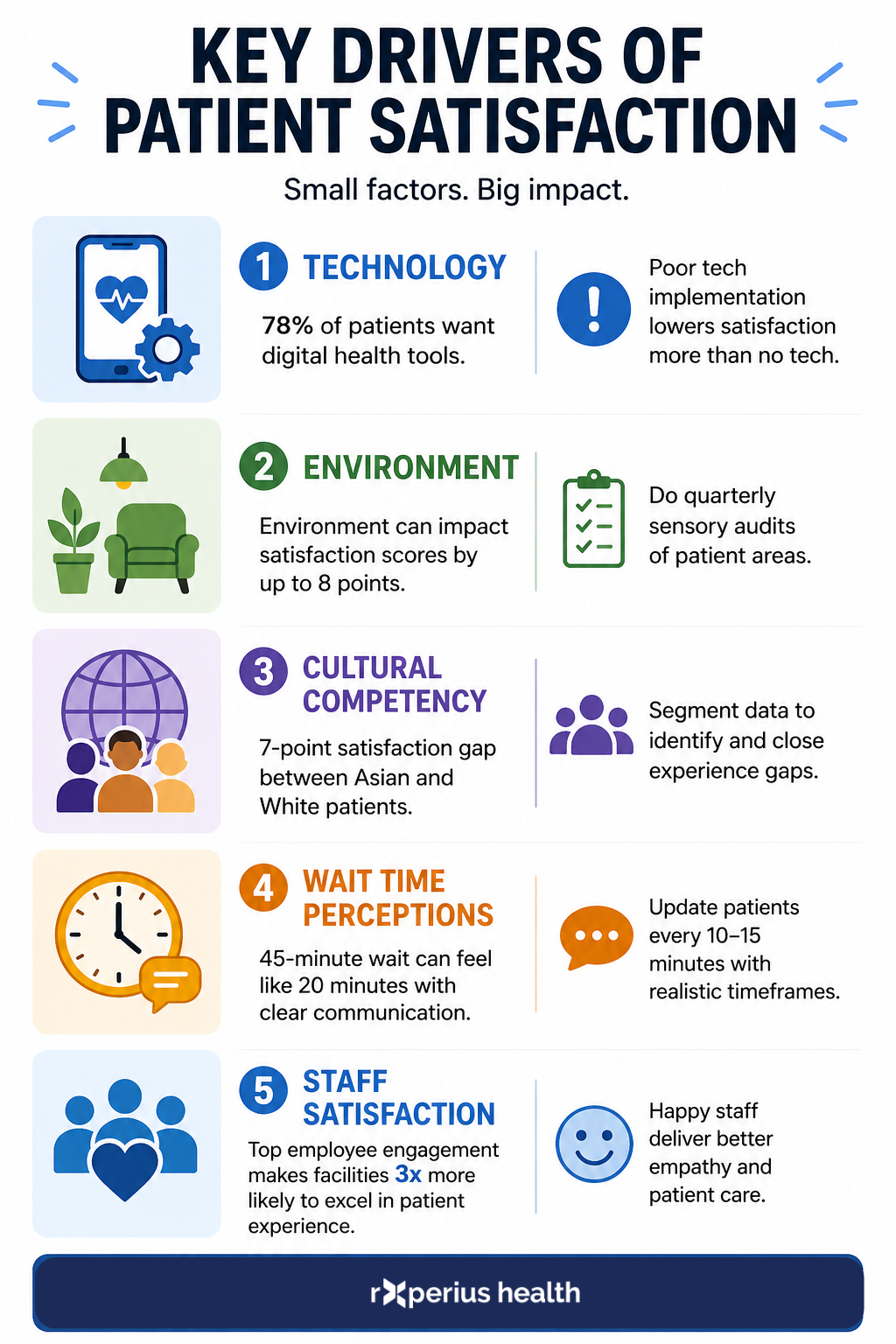
Technology creates both opportunities and pitfalls for satisfaction. While 78% of patients want digital health tools, poor technology implementation actually decreases satisfaction more than having no technology at all. Successful organizations test all patient-facing technology with real users before implementation and maintain human backup options for complex processes.
Environmental Factors
Ambient factors like lighting, noise levels, and even scent can influence satisfaction scores by up to 8 points on a 100-point scale. Quarterly sensory audits of patient areas help address controllable environmental factors that impact comfort and healing.
Cultural Competency
The largest satisfaction gaps appear between different demographic groups, with a 7-point difference separating Asian and White patients’ scores in medical practice settings.
Underrepresented populations face significant disparities in empathy, personalization, and service recovery. Segmenting satisfaction data by patient demographics reveals hidden disparities that average scores mask.
Wait Time Perceptions
How long patients think they waited matters more than actual wait time. Effective communication can make a 45-minute wait feel like 20 minutes. Wait time communication protocols that update patients every 10-15 minutes with realistic timeframes transform negative experiences into neutral or positive ones.
Staff Satisfaction
Facilities that score at the top for employee engagement are 3x more likely to perform at the top in patient experience. There’s a direct correlation between staff happiness and patient satisfaction. Unhappy employees simply cannot deliver the empathy and attention that creates positive patient experiences.
Measurement and Improvement Strategies
Traditional measurement approaches often miss opportunities for real-time improvement and meaningful intervention.
Advanced Metrics and Real-Time Feedback
Real-time health feedback tools capture 300% more actionable insights than traditional surveys by addressing concerns during care. Bedside tablets and text-based feedback systems enable immediate response to patient concerns during their care episode.
Post-Discharge Follow-Up
A single follow-up call within 72 hours of discharge increases overall satisfaction scores by an average of 12 points and reduces complaints by 40%. These calls address medication questions, symptom concerns, and provide closure to the care experience.
Personalization at Scale
Using patient preference data, including communication style, appointment timing, and provider preferences, can increase satisfaction by 18% without changing clinical care. Electronic health records can store these preferences for consistent application across all patient interactions.
|
Traditional Approach |
Modern Patient-Centered Approach |
Impact on Satisfaction |
|
Post-discharge surveys only |
Real-time feedback during care |
300% more actionable insights |
|
Generic communication |
Demographically-tailored messaging |
18% satisfaction increase |
|
Clinical focus only |
Staff engagement + patient focus |
3x better performance likelihood |
|
Average score tracking |
Demographic segmentation |
Reveals 7-point disparities |
|
No follow-up protocols |
72-hour post-discharge calls |
12-point score improvement |
The Future: AI and Telehealth’s Role
Emerging technologies are reshaping patient expectations and satisfaction drivers in unprecedented ways.
Risks and Benefits
Patients using AI-assisted care tools report 25% higher satisfaction when technology enhances rather than replaces human interaction. The key lies in positioning AI as a tool that gives providers more time for meaningful patient connections, not as a replacement for human touch.
Implementation Tips
Successful organizations introduce AI tools gradually with clear explanations of how they improve care delivery. They maintain easy access to human staff and position technology as augmenting rather than replacing provider capabilities.
The future of patient satisfaction will likely center on seamless integration between high-tech solutions and high-touch human experiences. Organizations that master this balance will lead satisfaction rankings in the coming years.
Building Better Patient Experiences
Patient satisfaction in healthcare has transformed from a nice-to-have metric into a critical business driver affecting reimbursement, reputation, and competitive positioning. The organizations that thrive understand that exceptional experiences require systematic approaches, real-time measurement, and genuine commitment to seeing healthcare data through patients’ eyes. Success starts with addressing one high-impact area, whether improving communication protocols or implementing real-time feedback systems. Small, consistent improvements create lasting advantages that benefit both patients and organizational success.
Common Questions About Patient Satisfaction
1. What’s the difference between patient satisfaction and patient experience?
Patient experience refers to what happens during care, while satisfaction measures how patients feel about those experiences.
2. How do satisfaction scores affect insurance reimbursements?
Medicare and private insurers tie 10-25% of payments to patient satisfaction scores through value-based purchasing programs.
3. Can high satisfaction scores mask poor clinical quality?
Yes, patients might rate highly based on interpersonal care while missing clinical red flags – track both metrics.
4. How quickly should organizations respond to negative patient feedback?
Responding within 24 hours converts 40% of dissatisfied patients into loyal advocates through effective service recovery.
5. What role does pricing transparency play in satisfaction?
Unexpected bills are the top cause of post-care dissatisfaction – clear upfront pricing increases satisfaction by 22%.
6. How do telehealth visits compare to in-person visits for satisfaction?
Telehealth scores 15% higher on convenience but 8% lower on personal connection than in-person visits.