
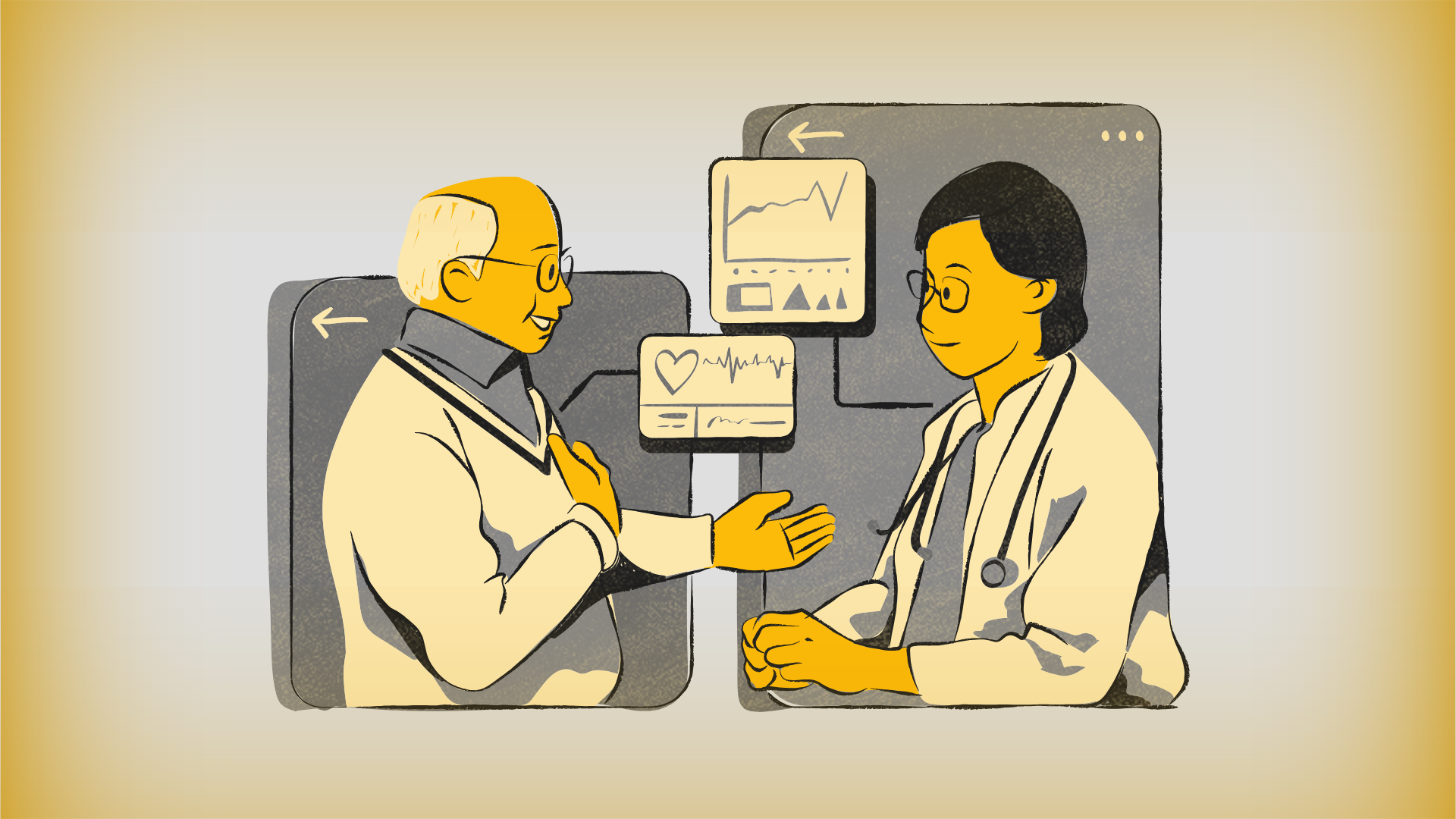
Running a hospital today means handling non-stop patient data, making urgent decisions, and facing growing pressure on staff. When every second counts, relying on scattered systems or delayed reports is simply not enough. That’s where real-time analytics in clinical decision support comes in, helping you identify risks sooner, reduce errors, and achieve better outcomes.
In this guide, we’ll break down what real-time analytics really means, how it transforms care in critical settings, and the eight key benefits every healthcare leader should be aware of, from reducing alert fatigue to predicting patient needs.
You’ll also see practical strategies and comparisons to guide your own implementation.
Why Real-Time Analytics Is Your Clinical Decision Support Game-Changer
Real-time analytics represents a fundamental shift from traditional batch processing to instantaneous data interpretation, which occurs within seconds of data generation. This differs from conventional systems that may take hours or days to process and present clinical insights. Real-time clinical analytics delivers actionable intelligence immediately when it matters most for patient care.
The healthcare industry has undergone significant evolution, with patient data now flowing from electronic health records (EHRs), wearable devices, laboratory systems, imaging equipment, and bedside monitors at unprecedented volumes.
This data explosion creates both an opportunity and a challenge: how do you transform this constant stream of information into meaningful, real-time insights in healthcare that directly improve patient outcomes?
Modern real-time data analytics platforms integrate machine learning algorithms, natural language processing, and predictive modeling to analyze patterns, detect anomalies, and provide evidence-based recommendations instantly.
This capability is particularly crucial in high-stakes environments, such as intensive care units, emergency departments, and surgical suites, where every minute can significantly impact patient survival and recovery outcomes.
The shift toward real-time data analysis isn’t just about speed; it’s about transforming how your healthcare organization anticipates, responds to, and prevents clinical challenges before they become critical.
Real-Time Analytics Implementation Comparison
Let’s walk through the different implementation options so you can easily see how they stack up.
1. Basic Rule-Based System
- Setup Time: 2–4 weeks
- Cost Range: $50K–150K
- Alert Accuracy: 65–75%
- Staff Training Required: Minimal (1–2 days)
- Long-term ROI: Moderate
2. AI-Enhanced Platform
- Setup Time: 3–6 months
- Cost Range: $200K–500K
- Alert Accuracy: 80–90%
- Staff Training Required: Extensive (1–2 weeks)
- Long-term ROI: High
3. Fully Integrated CDSS
- Setup Time: 6–12 months
- Cost Range: $500K–1M+
- Alert Accuracy: 85–95%
- Staff Training Required: Comprehensive (3–4 weeks)
- Long-term ROI: Very High
4. Cloud-Based Solution
- Setup Time: 1–3 months
- Cost Range: $100K–300K
- Alert Accuracy: 75–85%
- Staff Training Required: Moderate (1 week)
- Long-term ROI: High
5. Custom-Built System
- Setup Time: 12–18 months
- Cost Range: $1M+
- Alert Accuracy: Variable
- Staff Training Required: Extensive (4+ weeks)
- Long-term ROI: Variable
Key Benefits of Real-time Analytics in Clinical Decision Support
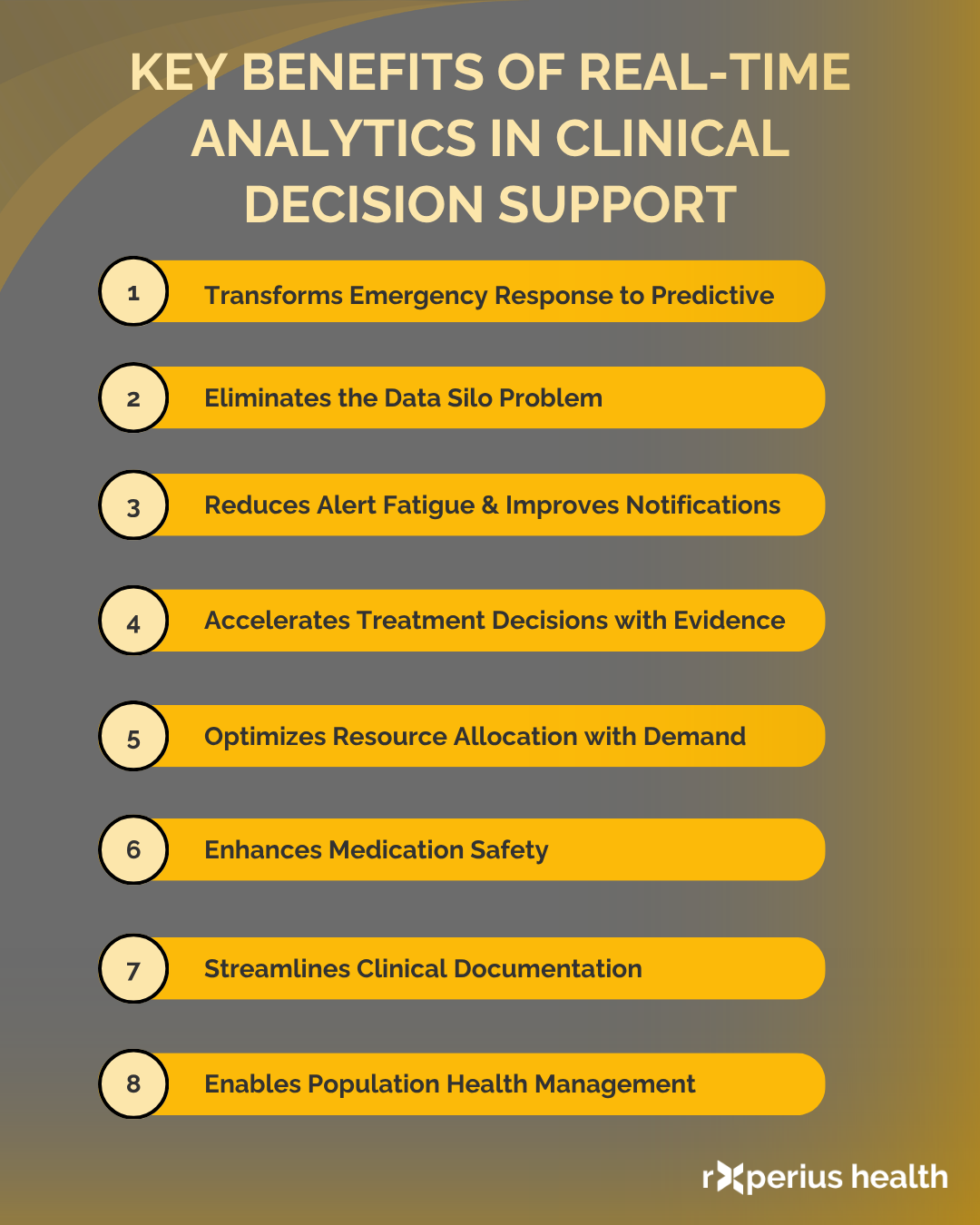
The power of clinical decision support, enhanced by real-time analytics, extends far beyond simple alerting systems. These eight strategic approaches will transform how your organization delivers care.
1. Transforms Emergency Response from Reactive to Predictive
Real-time analytics doesn’t just alert you when something goes wrong; it predicts problems before they become critical. Advanced algorithms analyze patient vitals, lab results, and historical patterns to identify deterioration risks hours before traditional monitoring would catch them.
Start with sepsis prediction models that analyze white blood cell counts, temperature trends, and heart rate variability simultaneously. While predicting emergencies saves lives, even the best models fail when data is trapped in isolated systems.
2. Eliminates the Data Silo Problem That Kills Efficiency
Your biggest challenge isn’t a lack of data; it’s data fragmentation. Real-time data creates a unified view by instantly correlating information from EHRs, lab systems, pharmacy databases, and monitoring devices into a single, actionable dashboard.
Few resources address practical integration strategies that actually work in real-world settings. Clinical data management becomes exponentially more effective when systems communicate seamlessly rather than operating in isolation.
Utilize FHIR-compliant platforms that can rapidly integrate data from multiple sources. Implement middleware solutions, such as Microsoft Azure Health Data Services, to create a seamless data flow between disparate systems. However, integration alone won’t solve your decision-making challenges if alerts overwhelm your clinical staff.
3. Reduces Alert Fatigue While Improving Critical Notifications
Traditional systems bombard clinicians with hundreds of alerts daily, leading to dangerous desensitization. Real-time analytics uses smart filtering and prioritization to deliver only the most relevant and urgent notifications when immediate action is required.
Research has shown the scale of this challenge: out of 28,536 alerts presented to physicians, only 13,947 (48.88%) were accepted — clear evidence of the alert fatigue crisis affecting healthcare professionals nationwide.
To combat this, deploy AI-driven alerting tools that adapt based on clinician feedback, fine-tuning sensitivity over time. Use a tiered notification approach, where urgent, high-risk cases prompt immediate alerts while lower-priority issues are deferred for later review. Still, even with optimized filtering, clinicians need rapid access to evidence-based guidance to support treatment decisions.
4. Accelerates Treatment Decisions Through Instant Evidence Synthesis
Instead of spending valuable time searching through multiple databases and research sources, real-time insights instantly present relevant treatment protocols, drug interaction warnings, and evidence-based recommendations tailored to each patient’s specific conditions and history.
A limited focus on evidence integration capabilities leaves clinicians without the necessary tools for handling complex cases. Clinical decision support systems with embedded medical knowledge bases automatically cross-reference patient data with current treatment guidelines and research findings.
Deploy clinical decision support systems with embedded medical knowledge bases that automatically cross-reference patient data with current treatment guidelines and research findings. While evidence synthesis speeds decisions, resource allocation still requires predictive planning to prevent bottlenecks.
5. Optimizes Resource Allocation Based on Predictive Demand
Real-time analysis examines patient flow patterns, seasonal trends, and operational data to predict bed availability, staffing needs, and equipment requirements before shortages occur, thereby preventing bottlenecks and improving patient satisfaction.
An important advantage of predictive analytics is its ability to streamline patient flow. Research reported that emergency departments applying predictive models cut wait times by about 20%. Despite this impact, operational benefits are often underemphasized in clinical discussions.
Install predictive analytics dashboards for department managers that forecast capacity needs 4-6 hours ahead based on current patient status and historical patterns. Beyond operational efficiency, patient safety requires constant vigilance against medication errors.
6. Enhances Medication Safety Through Instantaneous Cross-Referencing
Beyond basic drug interaction checking, real-time clinical analytics continuously monitor patient responses to medications, adjusting dosing recommendations based on real-time lab values, genetic markers, and response patterns unique to each individual.
Most focus on static medication checking rather than dynamic optimization that adapts to changing patient conditions. Advanced systems integrate pharmacogenomic databases with real-time monitoring to provide personalized dosing recommendations.
Integrate pharmacogenomic databases with real-time monitoring to provide personalized dosing recommendations that adapt to changing patient conditions. While medication safety is crucial, clinical documentation often becomes a bottleneck that slows care delivery.
7. Streamlines Clinical Documentation While Improving Accuracy
AI-powered real-time data analytics can automatically generate clinical notes, update patient records, and flag inconsistencies as care is delivered, reducing the documentation burden while improving record accuracy and completeness.
Documentation automation rarely gets discussed in clinical contexts, yet it represents a significant opportunity for efficiency gains. Ambient clinical intelligence tools listen to patient encounters and automatically populate relevant EHR fields.
Deploy ambient clinical intelligence tools that listen to patient encounters and automatically populate relevant EHR fields while suggesting additional documentation needs. Individual patient improvements are valuable, but population-level insights can prevent health crises before they occur.
8. Enables Proactive Population Health Management
Real-time insights in healthcare enable the identification of patients at risk across your entire population, allowing for proactive outreach to support preventive care, medication adherence, and chronic disease management before acute episodes occur.
Individual patient focus misses population-level opportunities that can transform community health outcomes. Risk stratification models continuously analyze your patient population to identify candidates for preventive interventions.
Create risk stratification models that continuously analyze your patient population to identify candidates for preventive interventions and care management programs. These capabilities represent just the beginning of what’s possible with real-time data analytics in clinical settings.
Your Next Steps in Clinical Analytics Implementation
Real-time analytics in clinical decision support is no longer optional; it’s becoming essential for safe, efficient, and responsive care. By transitioning from delayed data to immediate insights, hospitals can anticipate risks earlier, mitigate alert fatigue, enhance medication safety, and optimize resources before bottlenecks arise.
The key is not just adopting technology but aligning it with clinical workflows and staff needs. Start small, integrate steadily, and measure impact with clear metrics. Done right, real-time analytics turns data overload into smarter, faster, and safer patient care.
Common Questions About Real-Time Clinical Analytics
1. What’s the difference between real-time analytics and traditional clinical decision support systems?
Traditional CDSS typically process data in batches and provide static rules-based alerts. At the same time, real-time data analytics continuously analyze streaming data using AI and machine learning to provide dynamic, predictive insights within seconds rather than hours or days.
2. How much does implementing real-time analytics cost for a mid-sized hospital?
Implementation costs vary widely based on scope and existing infrastructure, but expect $200,000-$500,000 for initial deployment at a 200-bed hospital. However, ROI typically occurs within 12-18 months through reduced adverse events and improved efficiency.
3. Can real-time analytics work with our existing EHR system?
Most modern real-time clinical analytics platforms are designed to integrate with major EHR systems through standard APIs like HL7 FHIR. The key is to ensure that your EHR vendor supports these integration standards and that your IT infrastructure can handle the increased processing requirements.
4. How do we address staff concerns about AI replacing clinical judgment?
Frame real-time analytics as augmenting rather than replacing clinical expertise. Provide comprehensive training showing how these tools enhance decision-making speed and accuracy while clinicians retain full authority over patient care decisions and personalization of care.
5. What happens if the real-time analytics system goes down during critical patient care?
Implement redundancy through multiple data pathways and backup systems. Most enterprise-grade platforms offer maximum uptime guarantees with automatic failover capabilities. Maintain traditional monitoring and alerting systems as backups during transition periods.