

Ever wondered if your medical expertise could earn extra income during coffee breaks? You’re not alone. With 53% of physicians reporting experiencing burnout, healthcare professionals are seeking flexible income opportunities. Paid medical surveys offer the perfect solution, transforming your clinical knowledge into meaningful rewards while contributing to healthcare innovation.
What Makes Paid Medical Surveys Different from Regular Online Surveys
Not all surveys are created equal. While consumer surveys might pay a few cents for rating cereal or giving shopping feedback, paid healthcare surveys stand apart.
Here’s why:
- Specialized Knowledge Matters
Unlike casual surveys, medical surveys are designed for healthcare professionals and patients. They dive deep into treatments, devices, and protocols; not everyday products.
- Higher Rewards for Expertise
Because they tap into professional insights, paid healthcare surveys offer significantly higher compensation. Your clinical perspective carries weight in shaping research.
- Real Impact on Healthcare
Participation goes beyond just answering questions. Your input influences drug development, medical device design, and treatment guidelines that affect millions of patients.
- Exclusive to Qualified Professionals
These surveys require credential verification, ensuring that only licensed or specialized participants can join. That exclusivity means more relevant topics and better pay.
In short, medical surveys reward you for your expertise while helping advance healthcare.
Next, let’s look at the different types of surveys available to healthcare professionals.
Types of Medical Surveys Available to Healthcare Professionals
The variety of online medical surveys available ensures there’s something for every healthcare professional’s schedule and expertise level. Understanding these different formats helps you choose the most suitable opportunities.
Quick Opinion Surveys
These bite-sized surveys take 10-15 minutes and focus on treatment preferences, prescribing patterns, or reactions to clinical guidelines. Perfect for busy schedules, they can be completed between patient appointments. Compensation typically ranges from $25 to $75, making them ideal for consistent participation.
In-Depth Clinical Studies
Comprehensive surveys, lasting 30-60 minutes, delve into specific conditions, treatment protocols, or patient management strategies. Pharma brands and device manufacturers often conduct paid medical surveys for doctors to gather early feedback on treatments, packaging, and clinical materials, test the usability and trustworthiness of medical devices, and understand how physicians perceive reps or continuing education tools. These detailed studies offer compensation ranging from $150 to $ 500.
Patient Journey Surveys
Designed for patients or caregivers, these surveys explore treatment experiences and quality of life impacts. They’re particularly valuable for research on patient feedback for chronic diseases, helping pharmaceutical companies understand real-world treatment challenges. Compensation ranges from $75 to $200 for surveys lasting 20-45 minutes.
Product Testing Surveys
Medical device companies use these 15-30 minute surveys to gather feedback on prototypes, user interfaces, or packaging designs. Healthcare professionals test new products and provide detailed usability feedback, earning $50-150 per survey while directly shaping future medical innovations.
Moving beyond survey types, let’s examine who can actually participate in these rewarding opportunities.
Social Determinants of Health (SDoH) Surveys
The SDoH surveys gather insights into how non-medical factors such as housing, income, education, or access to transportation influence health outcomes. Providers and patients can both contribute valuable perspectives. Compensation usually ranges from $50 to $200, depending on survey length and depth.
Who Can Participate and Earn from Medical Surveys
Medical surveys welcome a wide range of participants, each bringing unique insights:
- Licensed Healthcare Professionals – Physicians, nurses, pharmacists, and PAs earn the most. Specialists often command premium rates. Verification of licenses and certifications is required.
- Medical Students & Residents – Accepted on many platforms. Earnings are lower ($25–$75 per survey), but their perspectives are valued.
- Healthcare Administrators & Researchers – Provide system-level insights on delivery, costs, and quality improvement.
- Patients with Specific Conditions – Patients with chronic conditions or recent treatment experiences can earn through patient experience feedback surveys. Compensation typically ranges from $50–$200, depending on condition and survey complexity.
Understanding who can participate leads us to the crucial question of earning potential across different professional levels.
How Much You Can Actually Earn from Medical Surveys
The earning potential from the best-paid medical surveys varies significantly based on your professional background, specialty, and participation frequency. Let’s break down realistic expectations across different healthcare roles.
Physician Earning Potential
Primary care physicians typically earn $75-200 per survey, with specialists commanding higher rates. Doctors can earn between $25 $500 per survey, depending on the topic, time commitment, and specialty. Top-earning physicians on platforms like Sermo report annual survey income of $3000-8000 through consistent participation.
Nursing and Allied Health Earnings
Registered nurses earn $50-150 per survey, while nurse practitioners and physician assistants fall into the $75-250 range. Critical care and specialty nurses often receive premium invitations due to their specialized knowledge and experience with complex patient populations.
Patient Survey Compensation
Patients earn $25-150 per survey, with rare disease patients commanding higher rates. Patient feedback in healthcare surveys for cancer patients, for example, might pay $100-300 when sharing treatment experiences with pharmaceutical companies developing new therapies.
Factors Affecting Earnings
Geographic location impacts rates, with US and European participants typically earning more. Survey length, topic complexity, and response quality history all influence invitation frequency and compensation levels. Platforms reward consistent, high-quality participants with premium survey access and higher-paying opportunities.
With earning potential established, let’s examine the best platforms where you can start generating this supplemental income.
Best Platforms for Paid Medical Surveys in 2025
Choosing the right healthcare survey app or platform significantly impacts your survey experience and earnings. Here are the top platforms that consistently deliver quality opportunities.
Sermo
Sermo leads with over 1 million physician members worldwide, offering surveys paying $50-400+ each. The platform combines social networking with survey opportunities, allowing physicians to discuss cases while earning from market research. Payment options include PayPal and direct deposit, with most surveys taking 15-30 minutes.
M3 Global Research
M3 caters to various healthcare professionals with competitive rates of $75-$500 per survey. Their strength lies in specialty-specific targeting and international reach. The platform offers additional features like medical news updates and continuing education opportunities alongside survey participation, creating a comprehensive professional experience.
MDForLives
With 900,000+ members, MDForLives provides a consistent survey flow across multiple specialties. Compensation ranges from $50 to $300, with quick payment processing and a mobile-friendly interface. The platform excels in connecting pharmaceutical companies with hard-to-reach specialist populations through targeted recruitment strategies.
InCrowd
InCrowd focuses on short, mobile-optimized surveys perfect for busy professionals. While individual surveys pay less ($25-75), the high frequency and quick completion times can generate substantial monthly income. Their patient survey app functionality means 70% of surveys are completed on mobile devices.
Here’s a comparison of the top platforms to help you choose the best fit:
|
Platform |
Average Pay Range |
Survey Length |
Payment Speed |
Mobile App |
Specialty Focus |
|
Sermo |
$50-400+ |
15-30 min |
7-14 days |
Yes |
Physicians only |
|
M3 Global |
$75-500 |
20-45 min |
10-21 days |
Yes |
Multi-specialty |
|
MDForLives |
$50-300 |
15-40 min |
5-10 days |
Yes |
Global HCPs |
|
InCrowd |
$25-75 |
5-15 min |
3-7 days |
Yes |
Quick surveys |
Now that you know where to participate, let’s cover how to get started and maximize your survey earnings.
Steps to Get Started and Maximize Your Earnings
Starting your journey with paid medical surveys requires strategic planning and consistent execution. These proven steps will help you build a sustainable supplemental income stream.
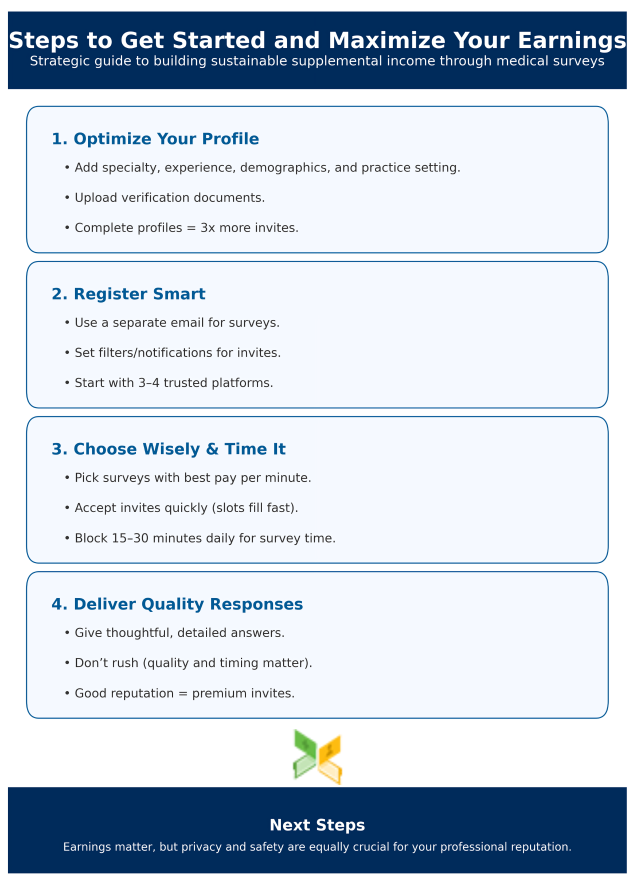
While maximizing earnings is important, understanding privacy and safety considerations is equally crucial for protecting your professional reputation.
Privacy and Safety Considerations You Need to Know
Participating in patient feedback in healthcare surveys requires careful attention to privacy and professional ethics. Understanding these considerations protects both you and your patients.
Data Protection Standards
Reputable platforms comply with HIPAA, GDPR, and other healthcare data regulations. Look for encrypted data transmission, secure servers, and clear privacy policies explaining how your information is used and stored. Avoid platforms that can’t provide specific details about their data security measures or regulatory compliance.
Red Flags to Avoid
Never pay fees to join survey platforms – legitimate companies pay you, not the other way around. Be cautious of platforms that request your Social Security number, bank account details, or detailed patient information. Avoid surveys that request specific patient names or violate confidentiality agreements with your employer.
Professional Liability Protection
Ensure your responses don’t violate employer policies or professional ethics guidelines. Avoid sharing proprietary institutional information or specific patient details. Frame responses as general professional opinions rather than specific case examples when discussing clinical scenarios or treatment outcomes.
Information Sharing Guidelines
Stick to publicly available medical knowledge and your general professional experience. Don’t share information from unpublished research, confidential committee discussions, or proprietary institutional data. When in doubt about the appropriateness of a survey question, err on the side of caution and decline participation.
Even with proper precautions, you are likely to encounter common challenges that require specific strategies to overcome.
Common Challenges and How to Overcome Them
Despite the benefits of paid healthcare surveys, participants often face predictable obstacles. Knowing how to address these challenges ensures consistent participation and earnings.
Survey Qualification Issues
Many participants face frustration when screened out after initial questions. Enhance your qualification rates by keeping your profile up to date and accurate. If you are consistently disqualified, review your profile for inconsistencies and consider platforms that better suit your specialty and experience level.
Payment and Technical Problems
Track your survey completions and payment dates to quickly identify discrepancies. Screenshot completion confirmations and payment notifications for your records. Most reputable platforms offer responsive customer service for payment issues. Contact them promptly if problems arise, rather than waiting.
Time Management Challenges
Busy healthcare professionals often struggle to find consistent time for surveys. Use brief gaps between patients, lunch breaks, or commute time for shorter surveys. Reserve longer surveys for dedicated time blocks when you can focus without interruptions from clinical tasks.
Survey Fatigue Prevention
Avoid burnout by limiting yourself to a maximum of 1–2 surveys per day. Choose quality over quantity – focus on higher-paying opportunities aligned with your expertise. Take breaks from survey participation when workload increases to maintain response quality and prevent survey fatigue.
Understanding these challenges naturally leads to common questions about survey participation and earnings.
Making Your Medical Expertise Pay Off
Paid medical surveys offer healthcare professionals a unique opportunity to monetize their expertise while contributing to medical advancement. With an earning potential of $ 1,000-$5,000+ annually through flexible participation, these platforms offer a valuable supplemental income without requiring additional time commitments.
Future trends in medical surveys will revolve around personalized medicine, telehealth, and digital health innovations, with paid online surveys for doctors increasingly targeting specific patient populations and conditions to provide tailored insights that drive customized treatments and technologies. Your medical insights are valuable – it’s time to turn them into tangible rewards.
Another fast-growing area is the integration of SDoH data into survey research. Pharmaceutical companies and health systems increasingly seek insights into how lifestyle, socioeconomic, and environmental factors shape patient care. Participation in these studies helps drive more equitable healthcare solutions and contributes to closing gaps in health outcomes across populations.
Your Questions About Medical Survey Participation Answered
Are survey earnings considered taxable income?
Yes, survey earnings typically count as taxable income in most countries. You’ll receive 1099 forms if you earn over $600 annually from a single platform in the US.
Can I participate while employed full-time?
Most employment agreements don’t prohibit survey participation, but review your employer’s policies regarding outside income and potential conflicts of interest before starting.
How often do survey invitations arrive?
Invitation frequency varies based on your specialty, profile completeness, and platform activity. Active participants typically receive 3-10 invitations weekly across multiple platforms.
What happens if I don’t qualify after starting?
Screen-outs are common and usually not compensated. However, some platforms offer small consolation payments ($1-5) for your time invested in qualification questions.
Can survey participation affect my medical license?
Legitimate survey participation shouldn’t impact professional licensing as long as you maintain patient confidentiality and avoid conflicts of interest with your clinical practice.