

Imagine driving 50 miles to see a doctor, only to find out you need a specialist who’s another 100 miles away. For millions of Americans in rural communities, this isn’t just a scenario; it’s a daily reality.
In the US, between 2017 and 2021, 71% of the decline in community hospitals occurred in rural areas, highlighting the crisis these communities face. Here’s the encouraging news: innovative approaches and targeted policy changes are transforming rural healthcare delivery across the nation.
The Current State of Rural Healthcare: Understanding the Critical Gap
The rural healthcare crisis extends far beyond simple geography. While we often hear about doctor shortages and hospital closures, the reality encompasses a complex web of interconnected challenges that create barriers to quality care.
In rural areas, preventable deaths from heart disease, certain cancers, and respiratory illness remain higher than in urban areas. This stark reality shows that access issues translate directly into lives lost. While more than 46 million individuals live in rural areas, approximately 80% of rural America remains medically underserved.
The financial strain on rural hospitals creates a domino effect throughout communities. When hospitals close, entire towns lose not just emergency services but also their largest employers. Families delay medical treatment, chronic conditions go unmanaged, and preventable emergencies become life-threatening crises.
What makes rural healthcare particularly challenging is the intersection of geographic isolation, economic constraints, and social factors. These elements create perfect storms that require innovative, multi-pronged approaches to overcome effectively.
Technology alone won’t solve these complex challenges, but it’s opening doors that previously seemed impossible.
Technology-Driven Solutions Revolutionizing Rural Care
Modern technology is breaking down traditional barriers that have long plagued rural healthcare delivery. These digital innovations aren’t just theoretical concepts; they’re delivering real results in communities across America.
Telemedicine Platforms Breaking Down Distance Barriers
Today’s telehealth solutions eliminate the need for patients to travel hundreds of miles for specialist consultations. Advanced platforms now offer real-time video consultations, remote monitoring, and AI-powered diagnostic tools supporting rural physicians with capabilities that rival in-person care quality. Patients can receive expert opinions without leaving their communities.
Mobile Health Units Bringing Care to Your Doorstep
Strategically deployed mobile clinics equipped with advanced diagnostic equipment serve as mini-hospitals on wheels. These units provide everything from routine checkups to emergency care in the most remote locations. They’re particularly effective for preventive screenings and chronic disease management.
AI-Powered Diagnostic Tools Supporting Rural Physicians
The rapid emergence of AI and other cutting-edge technologies will further empower rural providers to deliver quality and cost-efficient care to patients. Rural doctors now have access to specialist-level diagnostic capabilities, from analyzing medical images to predicting health risks, effectively multiplying their expertise without additional staffing.
Drone Delivery Systems for Medical Supplies and Medications
Unmanned aerial vehicles are revolutionizing medical logistics in rural areas. These systems deliver critical medications, blood samples, and medical supplies to areas previously inaccessible during emergencies or severe weather conditions. They’re proving particularly valuable for time-sensitive deliveries.
However, technology must be supported by adequate human resources to be truly effective.
Workforce Development Strategies That Actually Work
Rural communities are discovering that sustainable healthcare improvement requires homegrown solutions to workforce challenges. The most successful programs focus on developing local talent rather than competing with urban centers for existing professionals.
“Grow Your Own” Healthcare Professional Programs
Forward-thinking rural communities invest in local students through scholarship and mentorship programs. These initiatives create pipelines of healthcare workers with deep community ties and long-term commitment. Students who grow up in rural areas are more likely to return and stay after completing their education.
Innovative Retention Incentives Beyond Traditional Compensation
Successful rural healthcare systems offer comprehensive packages including housing assistance, student loan forgiveness, and professional development opportunities. Quality-of-life improvements such as flexible scheduling and community involvement opportunities often matter more than salary increases to professionals considering rural practice.
Cross-Training Models Maximizing Limited Staff Resources
Rural facilities implement comprehensive cross-training programs enabling healthcare workers to perform multiple roles. This approach ensures continuity of care even with limited staffing. Nurses might be trained in basic lab procedures, while technicians learn patient transport protocols.
These workforce strategies work best when supported by favorable policy environments.
Policy Solutions Creating Sustainable Change
Policy changes at the federal and state levels can create the foundation for lasting improvements in rural healthcare. Many effective programs already exist but remain underutilized due to a lack of awareness or complex application processes.
Federal Funding Programs You Might Not Know About
Numerous underutilized federal programs provide significant funding opportunities for rural healthcare initiatives. The Health Resources and Services Administration offers grants for infrastructure development, workforce training, and technology implementation. Many rural communities miss these opportunities due to limited grant-writing capacity.
State-Level Medicaid Innovations Improving Rural Access
Progressive states implement creative Medicaid waivers and expansions specifically designed for rural healthcare challenges. These innovations include coverage for telehealth services, transportation assistance, and community health worker programs. Successful models can be replicated across states.
Public-Private Partnership Models Driving Innovation
Collaborative efforts between government entities, private healthcare systems, and technology companies create sustainable funding models. These partnerships often combine public funding with private sector innovation to develop solutions that wouldn’t be possible through either sector alone.
Policy support becomes most effective when combined with community-driven initiatives.
Community-Centered Approaches Building Healthcare Resilience
Rural communities possess unique strengths that can be activated to improve healthcare outcomes. The most successful initiatives build on existing social networks and community leadership structures.
Empowering Community Health Workers as Care Coordinators
Trained community members serve as vital bridges between patients and healthcare systems. These workers provide culturally appropriate care coordination, health education, and social support. They understand local customs and can communicate effectively with residents who might be skeptical of outside healthcare providers.
Regional Healthcare Networks Sharing Resources and Expertise
Rural hospitals and clinics form strategic alliances that allow resource sharing, joint purchasing power, and collaborative care models. The hospital’s surgery volume rose by 32% in 2022 and 54% in 2023 at Montrose Regional Health after implementing a regional referral network, demonstrating the power of collaboration.
Preventive Care Programs Reducing Emergency Interventions
Community-based wellness initiatives focus on prevention and early intervention. These programs dramatically reduce the need for expensive emergency care while improving overall population health. They’re particularly effective when integrated with schools, faith communities, and local businesses.
Financial sustainability remains crucial for the long-term success of these community initiatives.
Innovative Financing Models Making Healthcare Affordable
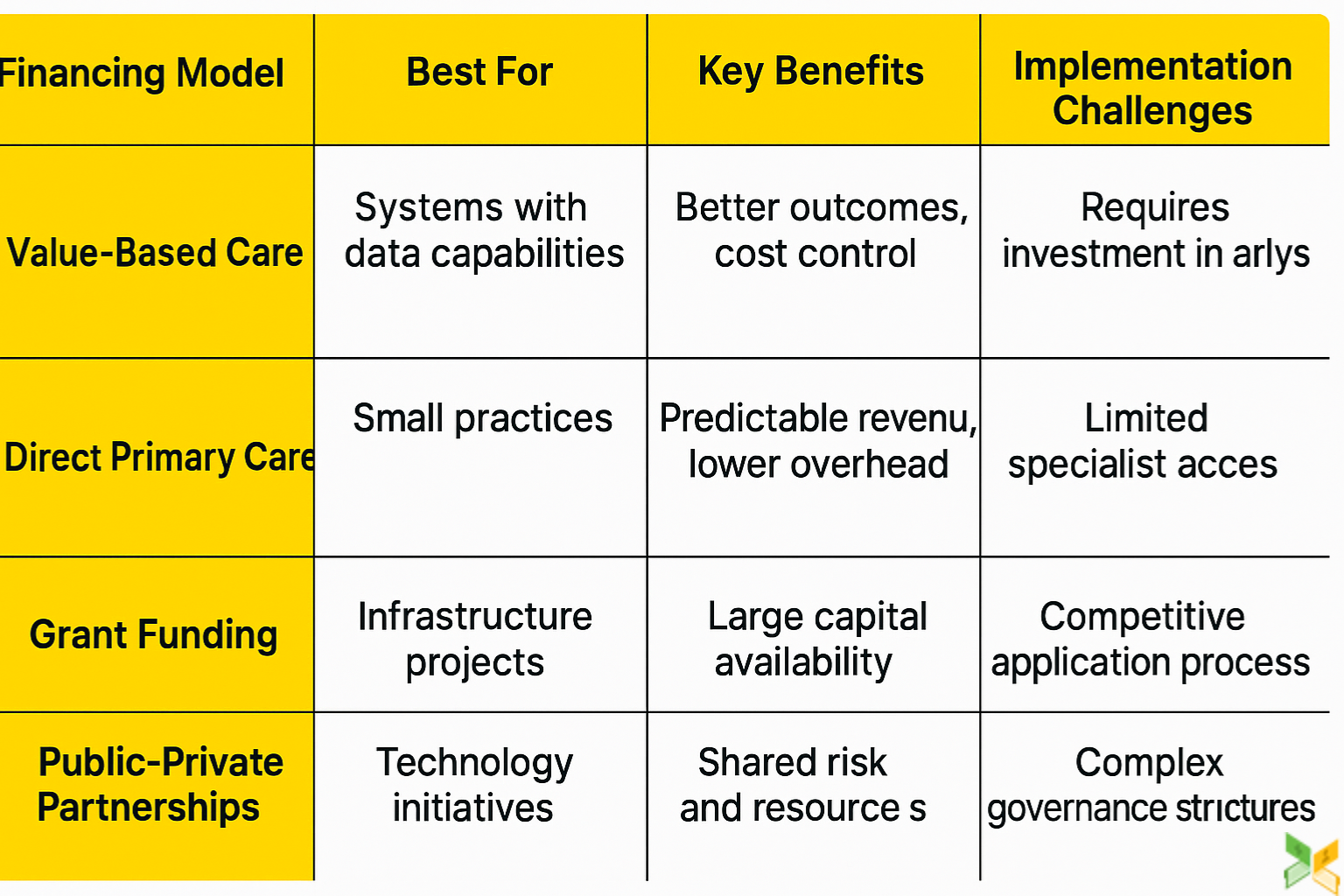
Traditional fee-for-service models often fail in rural settings due to low patient volumes and high operational costs. New financing approaches are creating more sustainable economic foundations for rural healthcare.
Value-Based Care Contracts Improving Outcomes and Costs
Rural healthcare providers implement payment models that reward health outcomes rather than service volume. These contracts create incentives for preventive care and population health management, aligning financial interests with patient wellness.
Subscription-Based Primary Care Services
Direct primary care models eliminate insurance barriers and provide affordable, accessible basic healthcare services through monthly membership fees. This approach reduces administrative costs while ensuring predictable revenue streams for providers.
Grant Writing Strategies for Sustainable Funding
Successful rural healthcare organizations develop systematic approaches to identifying and securing grant funding from multiple sources. They often partner with universities or hire specialized consultants to improve their success rates in securing competitive grants.
Emergencies require specialized approaches that build on these foundational improvements.
Emergency Response and Critical Care Solutions
Rural communities need robust emergency response systems that can function effectively despite geographic challenges and limited resources. Success requires coordination between multiple agencies and creative use of available assets.
Regional trauma networks create sophisticated communication and transportation systems, ensuring critical patients receive appropriate care within the “golden hour.” These networks connect rural facilities with urban trauma centers through coordinated protocols and rapid transport options.
Emergency medicine training for non-specialists enables rural healthcare providers to stabilize and treat critical patients until specialist care becomes available. This training focuses on life-saving interventions and decision-making protocols that can bridge care gaps effectively.
These emergency solutions work best when communities understand how to access and support them.
Taking Action for Better Rural Healthcare
Improving access to healthcare in rural areas requires comprehensive approaches combining innovative technology, strategic policy changes, community engagement, and sustainable financing. These aren’t just theoretical concepts; they’re proven strategies successfully implemented across rural America.
How to improve healthcare in rural areas starts with understanding that challenges are interconnected and require coordinated solutions. Technology alone won’t solve workforce shortages, and policy changes without community support often fail to achieve lasting impact.
Ready to transform healthcare access in rural communities? Start by assessing your community’s specific needs, connecting with local healthcare leaders, and exploring federal funding opportunities. The time for action is now.
FAQs on Rural Healthcare Solutions
1. How long does it typically take to see measurable improvements after implementing these solutions?
Technology-based solutions show immediate impact within 3-6 months, while workforce development and infrastructure changes typically require 2-3 years. Policy changes can take 1-5 years, depending on government involvement.
2. What mistakes do rural communities make when trying to improve healthcare systems?
The biggest mistake is replicating urban models without rural adaptations. Communities often focus solely on recruiting doctors while ignoring support systems and community health worker programs essential for success.
3. How can rural communities measure the success of healthcare improvement initiatives?
Key metrics include reduced emergency room visits, improved chronic disease management, decreased patient travel distances, increased preventive care utilization, and provider retention rates. Patient satisfaction surveys provide additional insights.