
Picture this: You’re a healthcare administrator facing yet another budget meeting where you need to justify resource allocation decisions, or maybe you’re a clinician wondering if there’s a better way to predict which patients need immediate attention. Sound familiar? You’re not alone. Healthcare organizations worldwide are drowning in data but starving for actionable insights. The good news? Data analytics in healthcare is transforming how we make critical healthcare decisions, from improving patient outcomes to cutting costs. In fact, 92% of respondents hope to achieve better patient experience as the top desired outcome of digital transformation.
Understanding the Healthcare Data Analytics Ecosystem
This comprehensive overview establishes the foundation for data-driven decision-making in healthcare settings. Healthcare organizations operate within a complex web of interconnected systems, regulations, and stakeholders, making strategic data utilization both challenging and essential. Understanding this ecosystem is crucial because it determines how effectively organizations can collect, analyze, and act on data insights.
Modern healthcare generates an unprecedented volume of data from electronic health records, medical devices, patient portals, insurance claims, and administrative systems. However, the real value lies not in the quantity of data but in how organizations structure their analytics approach to address specific decision-making needs. Successful healthcare organizations recognize that medical data analytics isn’t just about technology; it’s about creating a culture where evidence-based insights drive every major decision.
The most effective healthcare organizations approach data analytics as a strategic capability rather than a tactical tool, integrating insights into clinical workflows, operational processes, and strategic planning initiatives to create sustainable competitive advantages.
Key Applications of Data Analytics in Healthcare Decision-Making
While predictive analytics transforms patient care, it’s equally powerful for operational improvements. Let’s explore the specific ways organizations are putting data analysis in healthcare into practice.
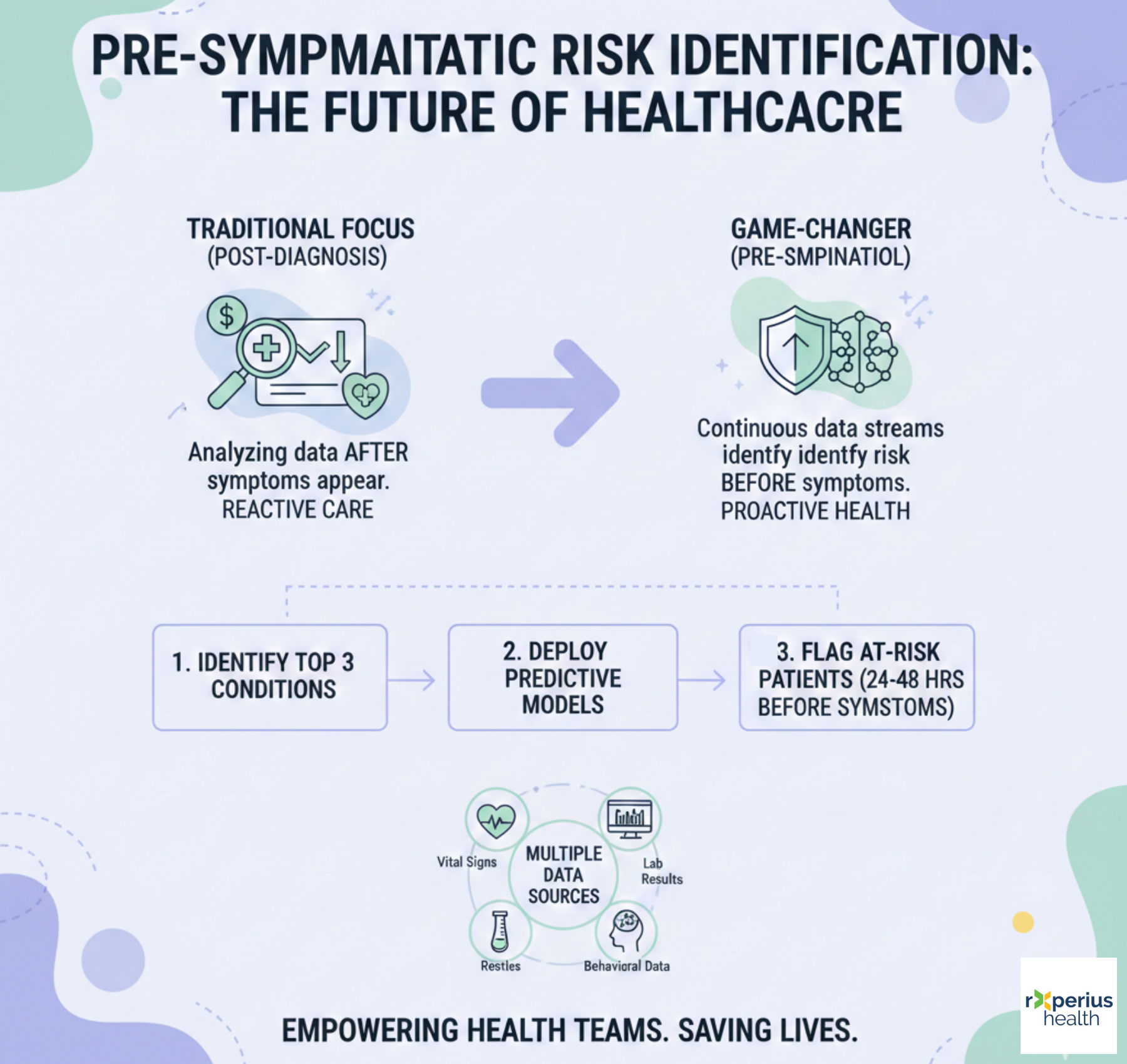
Predicting Patient Risk Before Symptoms Appear
Optimizing Staff Scheduling Using Real-Time Demand Forecasting
Traditional staffing models rely on historical averages, but advanced analytics can predict exact staffing needs based on weather patterns, local events, flu seasons, and even social media sentiment. Healthcare administrators can now implement dynamic staffing algorithms that consider external factors like weather conditions, since emergency room visits spike 23% during snowstorms.
These systems also account for local events and seasonal illness patterns to optimize nurse-to-patient ratios in real-time. Platforms like Kronos integrate with EHR data to automatically adjust staffing recommendations, helping hospitals avoid both understaffing and costly overtime expenses while maintaining quality patient care standards.
Personalizing Treatment Plans Through Genomic Data Integration
While most organizations focus on basic demographic personalization, cutting-edge facilities are integrating genomic data with environmental and lifestyle factors to create truly individualized treatment protocols. Healthcare providers partner with genomic testing companies to create treatment decision trees that consider genetic markers, medication metabolism rates, and environmental exposures.
Reducing Readmissions Through Predictive Social Determinants Analysis
Clinical factors only predict 60% of readmissions, but social determinants like housing stability, transportation access, and food security are equally important predictive factors that many organizations overlook. Healthcare teams create readmission risk scores that incorporate zip code health data, transportation accessibility scores, and socioeconomic indicators alongside traditional clinical metrics.
This comprehensive approach helps identify patients who need additional discharge support beyond medical care. Organizations can then deploy community health workers for high-risk patients identified through social determinants analytics, which reduces 30-day readmissions by up to 25% through targeted interventions.
Streamlining Supply Chain Management with Demand Prediction
Most healthcare supply chain analytics focus on cost reduction, but predictive analytics can prevent critical shortages by forecasting demand spikes based on epidemiological trends and clinical protocols. Healthcare organizations use machine learning algorithms that analyze historical usage patterns, seasonal trends, and emerging health threats to automatically adjust inventory levels.
These systems prevent stockouts of critical supplies while reducing carrying costs for excess inventory. During COVID-19, hospitals using predictive supply chain analytics maintained 95% supply availability compared to 67% for those using traditional ordering methods, demonstrating the clear operational advantage of data-driven approaches.
Improving Emergency Department Flow Through Predictive Triage
Traditional triage relies on presenting symptoms, but predictive triage uses historical patient data, current hospital capacity, and treatment duration algorithms to optimize patient flow before bottlenecks occur. Big data analysis could identify these people and create preventive plans to reduce the volume of their visits, as recurring patients account for up to 28% of emergency room visits.
Healthcare teams implement smart triage systems that analyze patient acuity, expected treatment time, and resource availability to dynamically route patients to appropriate care areas. These systems can predict discharge times and reduce average ED wait times by 35% while improving patient satisfaction scores through more accurate treatment time estimates.
|
Analytics Application |
Primary Benefit |
Implementation Timeline |
ROI Timeframe |
|
Risk Prediction |
Early intervention |
3-6 months |
6-12 months |
|
Staff Scheduling |
Cost reduction |
2-4 months |
3-6 months |
|
Treatment Personalization |
Better outcomes |
6-12 months |
12-18 months |
|
Readmission Prevention |
Quality improvement |
4-8 months |
9-15 months |
|
Supply Chain |
Efficiency gains |
3-5 months |
6-9 months |
Enhancing Medication Management Through Adherence Prediction
Instead of reactive medication adherence monitoring, predictive models can identify patients likely to stop taking medications before they actually do, enabling proactive interventions that prevent health complications. Healthcare organizations develop patient adherence risk scores using prescription refill patterns, demographic factors, and behavioral health data to trigger automated outreach programs.
These systems activate before adherence drops, catching problems early when interventions are most effective. Technology integration through smart pill bottles or mobile apps syncs with analytics platforms to provide real-time adherence data and predictive insights that help prevent medication-related hospital readmissions.
Optimizing Clinical Trial Recruitment Through Patient Matching Algorithms
Clinical trial recruitment typically takes 6+ months, but AI-powered patient matching can identify eligible candidates from EHR data in real-time as trials become available, dramatically speeding the process. Healthcare organizations create automated systems that continuously scan patient databases against active clinical trial criteria, sending recruitment alerts to clinicians when eligible patients have scheduled appointments.
This approach accelerates trial enrollment by 40% while providing patients access to cutting-edge treatments faster than traditional recruitment methods. The system benefits both researchers seeking participants and patients seeking advanced treatment options through data-driven matching.
Preventing Hospital-Acquired Infections Using Environmental Analytics
Most infection prevention focuses on hand hygiene compliance, but environmental sensors combined with patient movement analytics can predict and prevent infection transmission patterns before outbreaks spread throughout facilities. Healthcare facilities deploy IoT sensors that monitor air quality, surface contamination, and traffic patterns, combined with patient location data to create real-time infection risk heat maps.
These systems use contact tracing algorithms similar to COVID-19 apps to identify potential infection transmission chains before outbreaks occur. This proactive approach helps prevent costly and dangerous hospital-acquired infections through environmental monitoring and predictive analytics.
Maximizing Revenue Through Predictive Billing and Denial Prevention
Revenue cycle analytics typically focus on post-denial recovery, but predictive models can identify claims likely to be denied before submission, allowing for proactive corrections that improve cash flow. Healthcare organizations implement AI-powered coding assistants that analyze documentation quality, payer-specific requirements, and historical denial patterns to flag potential issues.
These systems identify documentation gaps in real-time during patient encounters, helping providers address problems before claim submission. This approach reduces claim denials by 45% and accelerates payment cycles, significantly improving revenue cycle performance and reducing administrative burden on billing staff.
Looking Ahead in Healthcare Analytics
Healthcare data analytics isn’t just a trend; it has become essential for survival in an increasingly competitive environment. Organizations that thrive will move beyond basic reporting to predictive and prescriptive analytics, creating proactive rather than reactive healthcare systems. The healthcare AI-powered tools market is expected to reach $110 billion by 2030, showing the massive investment flowing into these capabilities. Start with one high-impact use case, build your team’s analytical capabilities, and gradually expand your data-driven decision-making processes.
Common Questions About Healthcare Data Analytics
1. What types of data do healthcare organizations use for analytics?
Healthcare organizations utilize four main categories of data: clinical data from EHRs and medical devices, administrative data from billing and scheduling systems, patient-generated data from wearables and mobile apps, and external data, including social determinants and environmental factors. The key is creating integrated datasets that provide a complete view of patient health and organizational performance.
2. How do healthcare organizations ensure data privacy when using analytics?
Organizations implement multi-layered privacy protection, including data de-identification, role-based access controls, encryption at rest and in transit, and regular privacy audits. Healthcare data breaches are becoming more common, and a key aspect of healthcare is security. Advanced techniques like differential privacy and federated learning allow analytics without exposing individual patient data while maintaining compliance with regulations.
3. What’s the ROI of implementing healthcare data analytics?
Most healthcare organizations see 3-5x ROI within 18-24 months through reduced readmissions, improved operational efficiency, and better resource allocation. Specific benefits include a 15-30% reduction in preventable complications, a 20-25% improvement in staff productivity, and a 10-20% decrease in overall care costs. Starting with high-impact use cases that address existing pain points is key to achieving these returns.