

Picture this: You’ve just received a complex medical diagnosis, and your doctor hands you a stack of papers filled with medical jargon that might as well be written in another language. Sound familiar?
No worries. Millions of patients struggle to understand their healthcare information, leading to poor treatment adherence, anxiety, and worse outcomes. But here’s the thing – effective medical communications can transform this frustrating experience into an empowering one.
Understanding the Foundation: What Makes Medical Communications Essential for Patient Engagement
Medical communications serves as the critical bridge between complex healthcare information and patient comprehension, transforming how people interact with their health. Unlike traditional one-way medical information delivery, modern medical communications creates a dynamic dialogue that empowers patients to become active participants in their care journey.
The landscape of patient-provider relationships has evolved dramatically. Today’s patients expect transparency, accessibility, and personalized information that speaks to their specific concerns and circumstances. They want to understand not just what they need to do, but why it matters for their unique situation.
According to a study published in The American Journal of Medicine, patient education promotes patient-centered care and increases adherence to medication and treatments. This research shows that when patients receive clear, empathetic communication, they’re more likely to follow treatment plans and feel confident about their health decisions.
What is medical communications in practice? It’s recognizing that information alone isn’t enough – patients need context, support, and tools that make complex medical decisions feel manageable and personally relevant.
Key Strategies for Enhancing Patient Engagement Through Medical Communications
The medical communications industry has identified eight core strategies that consistently improve patient participation and outcomes. These approaches go beyond simple information sharing to create meaningful connections between patients and their care teams.
1. Transforms Complex Medical Data Into Digestible Patient Stories
Most healthcare organizations focus on simplifying language but miss the power of narrative structure. The most effective medical communications don’t just explain conditions – it tells the patient’s story, positioning them as the hero of their health journey.
Create patient education materials that follow a story arc: current situation, challenges ahead, tools and support available, and the successful outcome. For example, instead of listing diabetes management steps, craft a narrative that shows “A Day in the Life of Successfully Managing Diabetes” with relatable characters and scenarios.
This storytelling approach helps patients visualize their path forward and understand how each step contributes to their overall health goals.
2. Builds Emotional Bridges Through Empathetic Messaging
While competitors focus on accuracy and clarity, they often overlook the emotional intelligence aspect of medical communications. Patients need to feel understood before they can truly engage.
Incorporate emotional validation into all communications. Start patient materials by acknowledging feelings: “Receiving this diagnosis can feel overwhelming, and that’s completely normal.” Train communication teams to address not just the medical facts, but the emotional journey patients experience.
This empathetic approach creates trust and opens the door for honest conversations about fears, concerns, and barriers to treatment adherence.
3. Leverages Multi-Sensory Communication Channels for Maximum Impact
Most organizations rely heavily on text-based communications, but research shows that combining visual, auditory, and interactive elements increases retention significantly. Up to 99% of patients complete cognitive assessments when adopting this method using Creyos on tablets with technician support.
Develop communication strategies that engage multiple senses: interactive videos with clickable elements, audio explanations patients can listen to during commutes, tactile models for complex procedures, and gamified learning modules that make health education engaging rather than overwhelming.
This multi-sensory approach accommodates different learning preferences and makes complex medical information more accessible to diverse patient populations.
4. Creates Personalized Communication Pathways Based on Patient Preferences
Generic communication approaches fail because they don’t account for individual learning styles, cultural backgrounds, and life circumstances that influence how patients best receive and process information.
Implement patient communication preference assessments that identify optimal channels (text, email, video calls), timing (morning vs. evening), frequency, and content depth. Informed medical communications recognizes that one size doesn’t fit all when it comes to patient engagement strategies.
|
Communication Channel |
Gen Z (18-25) |
Millennials (26-40) |
Baby Boomers (57-75) |
|
Phone |
10% |
35% |
55% |
|
|
20% |
35% |
45% |
|
Text |
40% |
45% |
15% |
|
Patient Portals |
30% |
45% |
25% |
|
Face-to-Face |
15% |
25% |
60% |
5. Establishes Trust Through Transparent, Proactive Communication
Trust isn’t built through perfect communications – it’s built through honest, transparent dialogue that acknowledges uncertainties and addresses concerns before they become barriers to engagement.
Create “expectation-setting” communications that outline what patients can expect at each stage of treatment, including potential challenges. Develop proactive FAQ resources that address common fears and misconceptions before patients even ask.
Always include contact information for follow-up questions. This transparency builds confidence and reduces anxiety about the unknown aspects of medical care.
6. Integrates Social Proof and Community Support Elements
Individual patient education is less effective than community-supported learning. Patients engage more deeply when they see others successfully handling similar health challenges.
Develop patient story databases, peer mentorship programs, and community forums integrated into your communication strategy. Create “success story” content that shows real patients (with permission) achieving health goals, and make these stories easily accessible during key decision points.
This social proof approach helps patients feel less isolated and more motivated to engage with their treatment plans.
7. Provides Real-Time, Actionable Feedback Loops
Most medical communications are one-directional. The most engaging approaches create continuous dialogue where patient feedback immediately improves the communication experience.
Build feedback mechanisms into every communication touchpoint: quick surveys after appointments, response tracking on educational materials, and regular “communication check-ins” where patients can express what’s working and what isn’t.
Use this data to continuously refine your approach and show patients that their input matters in shaping their care experience.
8. Delivers Just-in-Time Information When Patients Need It Most
Information overload is as problematic as information gaps. The most effective medical communications deliver the right information at exactly the right moment in the patient’s journey.
Map patient journeys and identify key decision points, anxiety triggers, and information needs. Create automated systems that deliver targeted, relevant information based on where patients are in their treatment timeline.
For example, post-surgery care instructions delivered the day before discharge, not weeks earlier, ensure patients receive information when they’re most ready to process and act on it.
Measuring Success: How to Track Medical Communications Impact on Patient Engagement
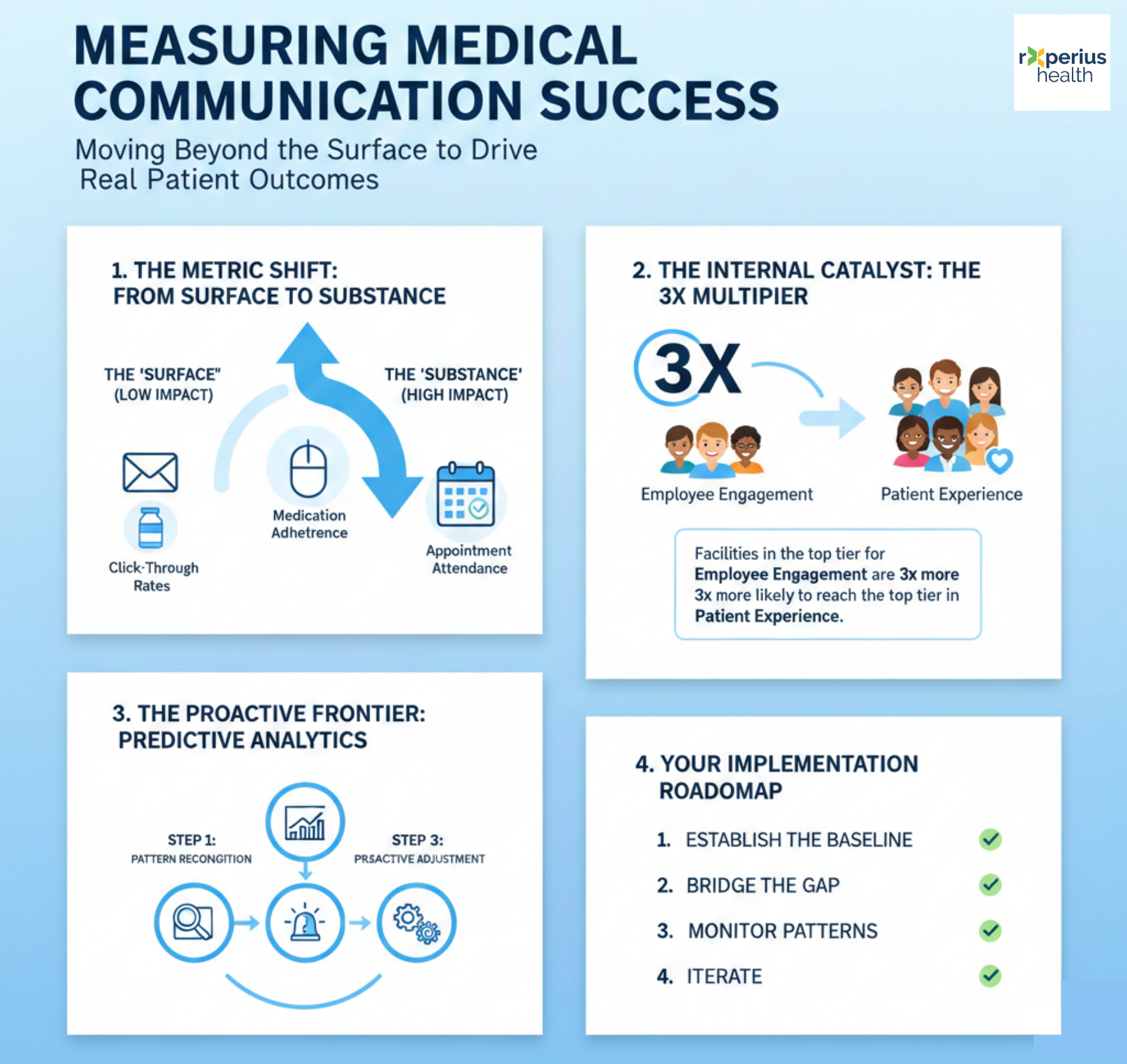
Taking Medical Communications Forward
Medical communications isn’t just about making information clearer – it’s about creating meaningful connections that inspire patients to take active roles in their health journeys. Across all settings, we’re seeing patient experience scores rise. In fact, in 2023, ambulatory surgery (85.3 out of 100 top-box ‘Likelihood to Recommend’ rating) and medical practices (84.1) reached a five-year high.
The organizations seeing the biggest impact are those that view medical communications as an ongoing relationship-building tool rather than a one-time information transfer. They’re measuring success not just through engagement metrics, but through improved health outcomes and stronger patient-provider relationships. Ready to transform your patient engagement strategy?
Common Questions About Medical Communications and Patient Engagement
1. How can healthcare organizations personalize medical communications at scale?
Use AI-powered communication platforms that analyze patient data to automatically customize messaging tone, content depth, and delivery channels based on demographics, health literacy levels, and engagement history.
2. What role does cultural competency play in medical communications effectiveness?
Cultural competency dramatically impacts engagement because health beliefs, communication styles, and trust-building approaches vary significantly across cultures, requiring culturally specific communication strategies rather than translated generic approaches.
3. How do you handle medical communications when treatment outcomes are uncertain?
Use transparent uncertainty communication with probabilistic language (“most patients experience,” “typically”) rather than absolute statements, and provide ranges of possible outcomes with clear explanations of influencing factors.