
Healthcare should feel supportive, not stressful. Yet for many patients, it still means long waits, missed calls, and confusing information. Today, that’s changing. 75% of patients want digital healthcare services, and digital tools are reshaping the way people connect with care—making it faster, clearer, and more personal.
From booking appointments online to tracking health in real time, technology is giving patients more control over their own journeys. This shift isn’t about replacing doctors; it’s about removing friction and improving everyday experiences. Together, these innovations are redefining the digital patient experience by making care more accessible, connected, and patient-centric.
In this blog, we’ll explore how digital tools are powering modern patient experience solutions and helping healthcare finally work around patients, not the other way around.
Digital Tools Are Creating a Healthcare Revolution That Puts Patients First
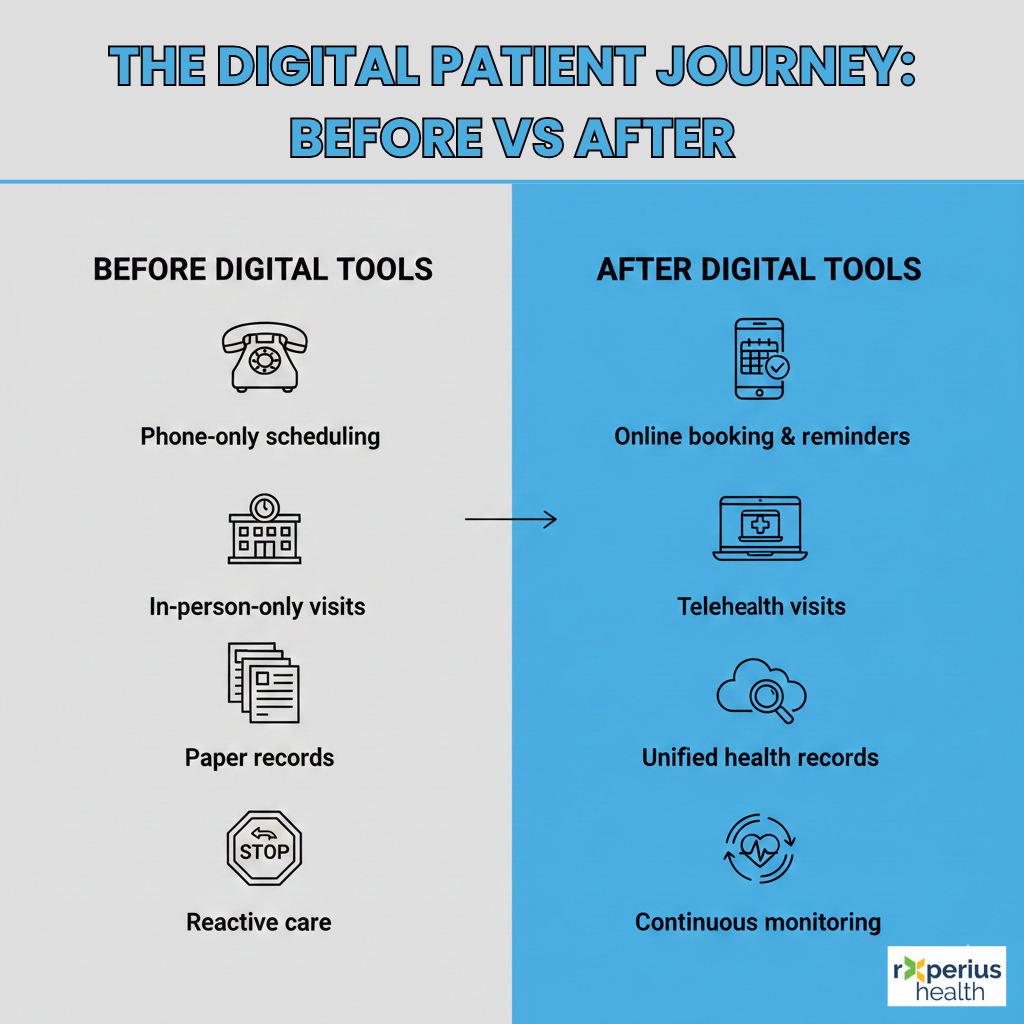
Healthcare is experiencing its biggest transformation in decades, and it’s happening because of one simple shift: putting patients in control. Unlike the old days when healthcare felt like something that happened to you, patient experience solutions are making it something that happens with you as an active partner.
This isn’t just about fancy technology for technology’s sake. It’s about solving real problems that have plagued healthcare for years – long wait times, poor communication, limited access to information, and one-size-fits-all approaches that don’t account for your unique needs.
Amid staffing shortages and surging provider workloads, digital health solutions have the potential to improve care quality and efficiency by addressing gaps and avoiding missed opportunities.
What makes this revolution particularly exciting is how it’s democratizing healthcare access. Whether you’re in a rural area with limited specialist access, managing a chronic condition that requires frequent monitoring, or simply trying to juggle healthcare appointments with a busy work schedule, digital tools are breaking down traditional barriers and creating new possibilities.
By capturing SDOH insights, digital tools also surface barriers that impact care long before a patient reaches the exam room.
Now, let’s explore the specific tools that are making this transformation possible.
Specific Digital Tools Transforming Patient Experience
The digital patient experience is being reshaped by innovative technologies that address different aspects of care. Each tool serves a unique purpose while working together to create a more connected healthcare journey.
Smart Patient Portals Transform Healthcare From Reactive to Proactive
Gone are the days when your medical information felt locked away in some mysterious filing system. Modern patient portals like MyChart and Epic are giving you unprecedented access to your health data, turning you from a passive recipient of care into an active participant in your health journey.
These platforms do far more than just store your information – they’re becoming intelligent health companions that help you understand your results, track your progress, and stay connected with your care team. You can view lab results the moment they’re available, often with easy-to-understand explanations that don’t require a medical degree to decipher.
Telehealth Platforms Break Geographic and Time Barriers
The telehealth revolution has fundamentally changed what “going to the doctor” means. Platforms like Teladoc, Amwell, and Zoom for Healthcare have made it possible to receive quality care from anywhere – your living room, office, or even while traveling.
But here’s what many people don’t realize: telehealth isn’t just about convenience (though that’s certainly a huge benefit). It’s also improving health outcomes by making it easier to maintain continuity of care, especially for mental health services, chronic disease management, and follow-up appointments. Studies show that patients are more likely to attend virtual appointments than in-person ones.
Wearable Technology Turns Your Body Into a 24/7 Health Monitor
Your Apple Watch or Fitbit isn’t just counting steps anymore – it’s becoming a sophisticated health monitoring system that can detect everything from irregular heartbeats to sleep disorders.
These devices are creating a continuous feedback loop between you and your health, making it possible to catch potential problems before they become serious issues. When that information flows into a secure data portal, patients and care teams can review trends over time and act sooner.
What’s particularly powerful about wearables is how they’re shifting healthcare patient experience from episodic (only when you’re sick) to continuous (ongoing wellness monitoring). This means your doctor can see trends and patterns in your health data over time, leading to more personalized and preventive care approaches.
AI-Powered Chatbots Provide Instant Support When You Need It Most
Healthcare doesn’t operate on a 9-to-5 schedule, and neither do your health concerns. AI-powered chatbots and virtual assistants are filling the gap by providing immediate support and guidance when human staff aren’t available.
These aren’t just simple question-and-answer systems; modern healthcare chatbots can help with symptom checking, medication reminders, appointment scheduling, and even basic mental health support. They’re particularly valuable for triaging concerns, helping you determine whether you need immediate care, can wait for a regular appointment, or can manage the issue at home.
Mobile Health Apps Create Personalized Care Experiences
The explosion of mobile health apps has put specialized healthcare tools directly in your pocket. From apps that help manage diabetes and track blood pressure to mental health platforms like Headspace Health and BetterHelp, these tools are making specialized care more accessible and affordable.
Personalised care considers a patient’s unique needs and preferences, with the NHS working towards making it ‘business as usual’ for 2.5 million people by 2024. What sets the best health apps apart is their ability to learn from your behavior and preferences, creating increasingly personalized experiences over time.
Electronic Health Records Enable Seamless Care Coordination
Behind the scenes, Electronic Health Records (EHRs) are working to ensure that all your healthcare providers have access to the same up-to-date information about your health. This means no more filling out the same forms repeatedly or worrying that your allergist doesn’t know about the medication your cardiologist prescribed.
Modern EHR systems are becoming more interoperable, meaning they can “talk” to each other even if different healthcare systems use different platforms. This is particularly important if you see specialists across different hospital systems or move to a new area and need to transfer your medical records.
When combined with SDoH data, EHRs can help teams coordinate care around real-life barriers—not just clinical diagnoses.
Remote Patient Monitoring Brings Hospital-Level Care Home
Remote Patient Monitoring (RPM) technology is making it possible to receive hospital-level monitoring from the comfort of your own home. This is particularly valuable for patients with chronic conditions like heart disease, diabetes, or COPD who need regular monitoring but don’t want to spend their lives in doctors’ offices.
These systems can track everything from blood pressure and blood glucose levels to oxygen saturation and weight, automatically transmitting this data to your healthcare team. If something looks concerning, your care team can intervene immediately, often preventing hospitalizations and emergency room visits.
Digital Therapeutics Offer Evidence-Based Treatment Through Technology
Digital therapeutics represent a new category of medical treatment that delivers interventions through patient experience software rather than traditional medications or procedures. These aren’t just wellness apps – they’re FDA-approved medical devices that can treat conditions ranging from substance abuse and depression to ADHD and chronic pain.
|
Digital Tool |
Primary Benefit |
Best For |
Implementation Speed |
|
Patient Portals |
24/7 access to health records |
All patients seeking transparency |
Quick (weeks) |
|
Telehealth |
Remote consultations |
Rural patients, follow-ups |
Immediate |
|
Wearables |
Continuous monitoring |
Chronic conditions, prevention |
Personal choice |
|
AI Chatbots |
Instant support |
After-hours questions |
Quick setup |
|
Mobile Apps |
Personalized care |
Specific conditions |
Immediate download |
|
EHRs |
Care coordination |
Complex cases, multiple providers |
System-wide (months) |
|
RPM |
Home monitoring |
High-risk patients |
Provider setup required |
|
Digital Therapeutics |
Evidence-based treatment |
Specific diagnosed conditions |
Prescription required |
Taking Control of Your Healthcare Journey
Digital tools are fundamentally changing how we experience healthcare, making it more accessible, personalized, and convenient than ever before. From smart patient portals that put your health information at your fingertips to AI-powered tools that provide instant support, these innovations are solving real problems that have frustrated patients for decades.
The most exciting part? We’re still in the early stages of this digital health revolution. Ready to take control of your healthcare journey? Start by exploring the digital tools your current healthcare providers offer, then consider adding technologies that align with your specific health goals.
Common Questions About Digital Healthcare Tools
1. What happens to patient privacy when using digital health tools?
Digital health tools are subject to stricter privacy regulations than many other technologies. HIPAA requires healthcare organizations to implement robust security measures, including encryption, access controls, and audit trails. Always verify that any health app or platform you use is HIPAA-compliant.
2. How do digital tools handle patients who aren’t tech-savvy?
Many healthcare organizations offer multiple support options, including in-person training sessions, simplified interfaces designed for older adults, phone-based support for digital platforms, and hybrid approaches that combine digital tools with human assistance.
3. Can digital health tools replace my regular doctor visits?
Digital tools are designed to complement, not replace, traditional healthcare. While they’re excellent for routine monitoring, follow-up care, and managing chronic conditions, certain situations still require in-person evaluation, such as physical examinations and emergencies.